-Vince Lombardi
Research conducted by the Pew Research Center (2020) shows that Anxiety and depression are on the rise among the youth in America. Seven out of ten teenagers today see anxiety and depression as a major problem among their peers, it tops the list that includes bullying, drug addition, alcohol, poverty, teen pregnancy, and gangs. High school students today have more anxiety symptoms and are twice as likely to see a mental health professional as teens in the 1980’s. In a survey conducted by the American Psychological Association, found that normal students of Generation Z (students born since 1997) have more anxiety than child psychiatric patients in the 1950s. Generation Z is experiencing the same things as older generations but a greater intensity than the rest of the population. But Generation Z has also different stressors than previous generations, for example, social media and school shootings, these are two things that this generation has experienced that previous generations have not. According to Arthur Evans Jr., PhD, the CEO of the American Psychological Association, Generation Z, from a developmental standpoint, particularly our executive functioning, the part of the brain that controls stress isn’t fully developed until the age of 25 (Evans, 2018).
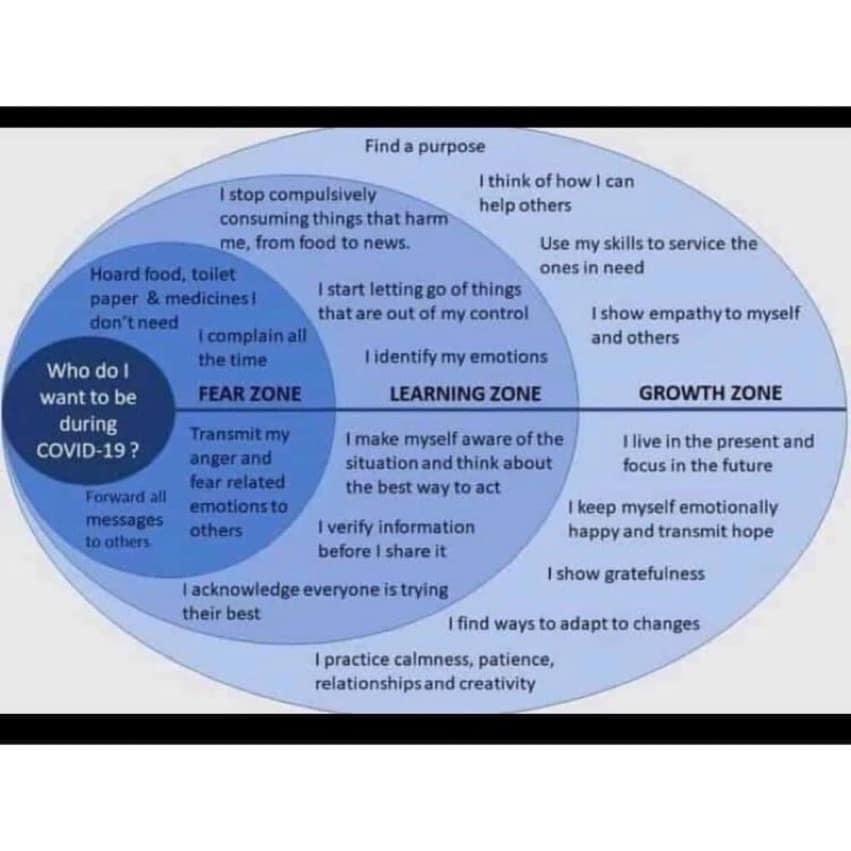
During this time of COVID-19, stress among everyone is heightened but among Generation Z it’s much worse. So, what can be done to help with this generation’s mental health, as well as our own. One of the things that can help with better mental health help is to have a positive social support group around you. It’s been proven, the better our mental health the better we do in life and this starts with the group of people that surround us and that includes those on Facebook, Instagram, Snapchat, etc. have a positive circle of support. Getting enough sleep, eating right, and exercising helps to relieve the stress in our lives. This is a lifestyle change that if put into action and made an everyday habit Generation Z would be on their way to living with less stress and good mental health. But what if the worry and stress lead to anxiety and fear? There is a push by mental health professionals to teach Cognitive Behavioral Therapy in schools, so students can be equipped to calm their stress and deal with these issues. It all starts with worrying.
Worrying is a feeling of uneasiness or being overly concerned about a situation or problem. Everybody worries, if you think about it, it’s what keeps us safe if you use it right. Once you recognize and acknowledge the worry, you should immediately create a plan to deal with the worry. For example, you have an upcoming exam and you need to get a good score on it to keep your GPA up, you should sit down and create a plan of how you are going to prepare for the exam, worrying is the first step in the problem solving process. Worry is supposed to be only a trigger for problem solving. It is not supposed to last a long time. When you worry about a legitimate concern and then do not act on that worry, you transfer it from a signal to noise. There is two types of worry, reality and noise. Reality worry is the worry that is going to happen, for example, the upcoming exam, discussed before, that is reality, you will have an exam, it’s inevitable, it’s going to happen. Noise is the voice that you hear telling you, “you can’t do it”, “you are not good enough”, it is not based in reality but in your mind. Noise can be defeated with self-talk, talk that is based on facts not fear. The voice of noise is based on fear, the negativity of thought that grows when not addressed in the beginning. If the noise is not addressed, it comes back as stress. Stress is different for everyone; stress is what happens when you don’t address the worry. Not addressing the worry and avoiding it, is like a pendulum swinging, the worry comes back stronger. Anxiety is a normal reaction to stress; it refers to anticipation of a future concern based on fear. Fear is an emotional response to an immediate threat and is more associated with a fight or flight reaction – either staying to fight or leaving to escape danger (Ranna Parekh, M.D., M.P.H., 2017).
There is a way to help you “fight” through the anxiety, talk therapy or cognitive behavioral therapy (CBT). The beauty of CBT is how easy it is to learn: all you need is pen and paper (or a laptop, or a device with an app that lets you take notes). The specific details for practicing CBT differ from book to book and therapist to therapist, but the basic process is something like this:
l. When you are feeling anxious, depressed, or otherwise distressed, take a moment to write down what you are feeling or talk to yourself.
2. Write down your level of distress. (For example, you could score it on a scale of 1 to 10.)
3. Write down what happened and what your automatic thoughts were when you felt the pang of anxiety or despair. (For example, “someone I was interested in canceled our date. I said to myself, ‘This always happens. No one will ever want to go out with me. I’m a total loser.'”)
4. Look at the categories of distorted automatic thoughts below, and ask yourself: Is this thought a cognitive distortion? Write down the cognitive distortions you notice. (For example, looking at the automatic thoughts in number 3 above, you might write “personalizing, overgeneralizing, labeling, and catastrophizing.”)
5. Look at the evidence for and against your thought.
6. Ask yourself what someone might say who disagreed with you. Is there any merit in that opinion?
7. Consider again what happened and reevaluate the situation without the cognitive distortions.
8. Write down your new thoughts and feelings. (For example, “I am sad and disappointed that a date I was excited about got canceled.”)
9. Write down again, using the same scale as before, how anxious, depressed, or otherwise distressed you feel. Chances are the number will be lower—perhaps a lot lower.
CBT takes discipline, work, and commitment. Many therapists recommend doing this type of exercise at least once or twice a day. With time and practice, you are likely to find that your distorted negative thoughts no longer have the grip on you that they once did (Lukianoff & Haidt, 2019).
Evans, A. C. (2018, November 20). Retrieved from https://www.apa.org/research/action/speaking-of-psychology/teen-stress
Horowitz, J. M., & Graf, N. (2020, January 5). Most U.S. Teens See Anxiety, Depression as Major Problems. Retrieved from https://www.pewsocialtrends.org/2019/02/20/most-u-s-teens-see-anxiety-and-depression-as-a-major-problem-among-their-peers/
Lukianoff, G., & Haidt, J. (2019). The coddling of the American mind: how good intentions and bad ideas are setting up a generation for failure. New York City: Penguin Books.

 The Prepared Student
wow!! 101Transition to Life Not College and Career
LikeLike